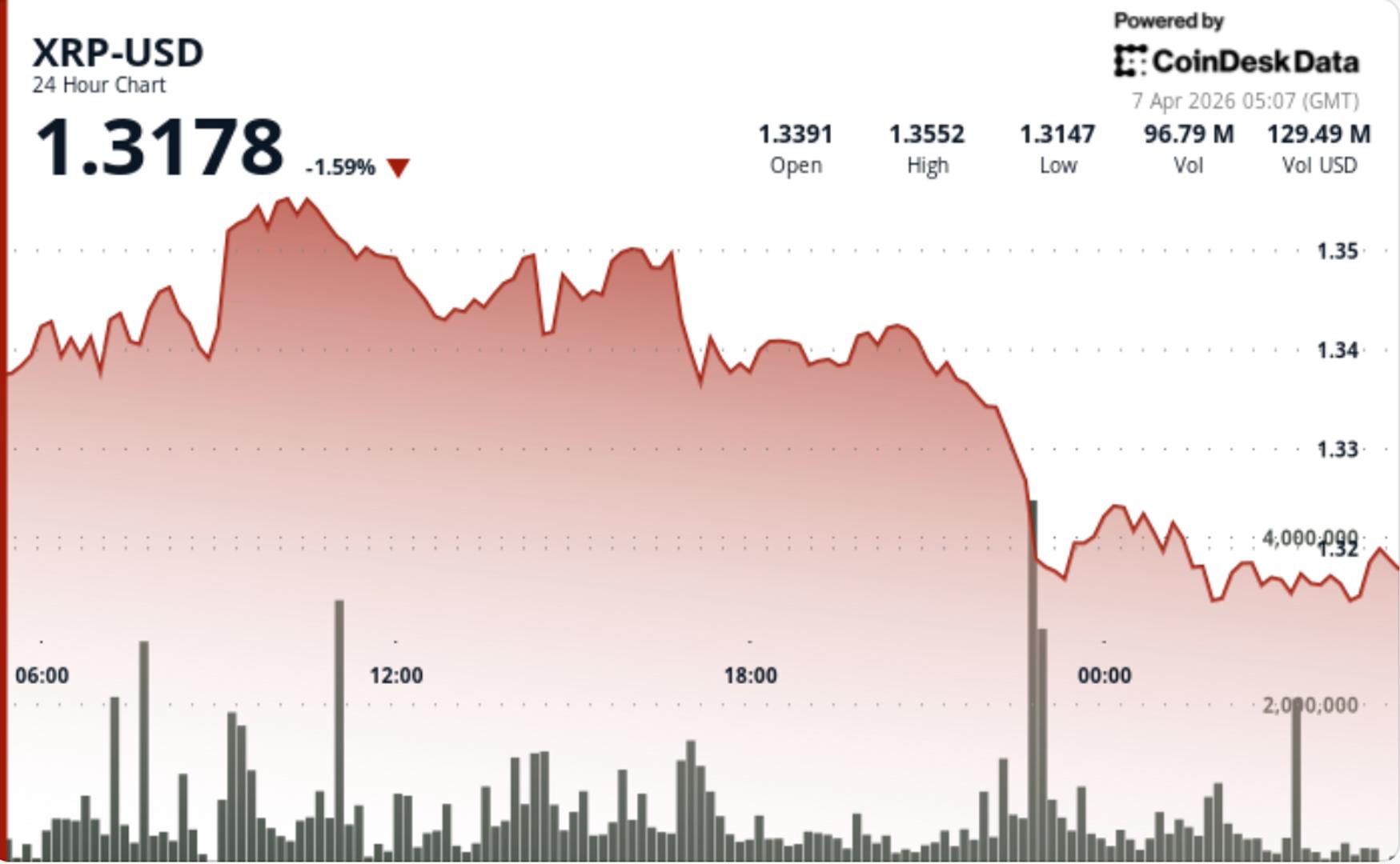
XRP's recent rejection at $1.35 and subsequent slip to $1.31 reveals critical market dynamics that traders—especially those relying on automated strategies—need to understand. This isn't just another price dip; it's a textbook example of how liquidity depth directly impacts volatility and predictability in crypto markets.
Understanding the Liquidity Crisis
When order book depth collapses, prices become more volatile and harder to predict. This is particularly problematic for:
- AI trading bots that depend on stable liquidity pools
- DeFi protocols using XRP as collateral or trading pair
- Swing traders expecting traditional support/resistance patterns to hold
The failed breakout at $1.35 wasn't a fundamental rejection—it was a structural failure caused by insufficient market depth. Fewer buyers at higher prices means less resistance to downward pressure.
What This Means for Automated Strategies
Machine learning models trained on historical XRP data may struggle here. When liquidity evaporates:
- Slippage increases dramatically on large orders
- Stop-losses trigger faster than expected
- Price predictions become unreliable because traditional volume-price relationships break down
Algorithmic traders should consider reducing position sizes or adjusting risk parameters to account for lower liquidity windows. Backtests that ignore liquidity conditions will overestimate potential returns.
Positioning Risk and What's Next
The summary mentions that "positioning builds," suggesting traders are becoming increasingly directional. This creates a precarious setup: when enough traders take similar positions on thin liquidity, any catalyst—news, liquidations, or whale movement—can trigger sharp, unpredictable moves.
This environment favors traders who:
- Monitor real-time order book changes
- Use tighter stop-losses to manage tail risk
- Avoid FOMO entries at key resistance levels
- Consider using limit orders instead of market orders
The Bigger Picture
XRP's struggle to break $1.35 isn't necessarily bearish long-term, but it signals a warning for short-term traders: don't fight the structure. When liquidity dries up, prices move faster and less predictably. Automated trading systems without built-in liquidity filters will experience unexpected slippage and worse fills.
The key takeaway? In low-liquidity environments, risk management becomes your only reliable edge. Focus on position sizing, maintain dry powder for opportunities, and avoid trading during off-peak hours when depth disappears entirely.