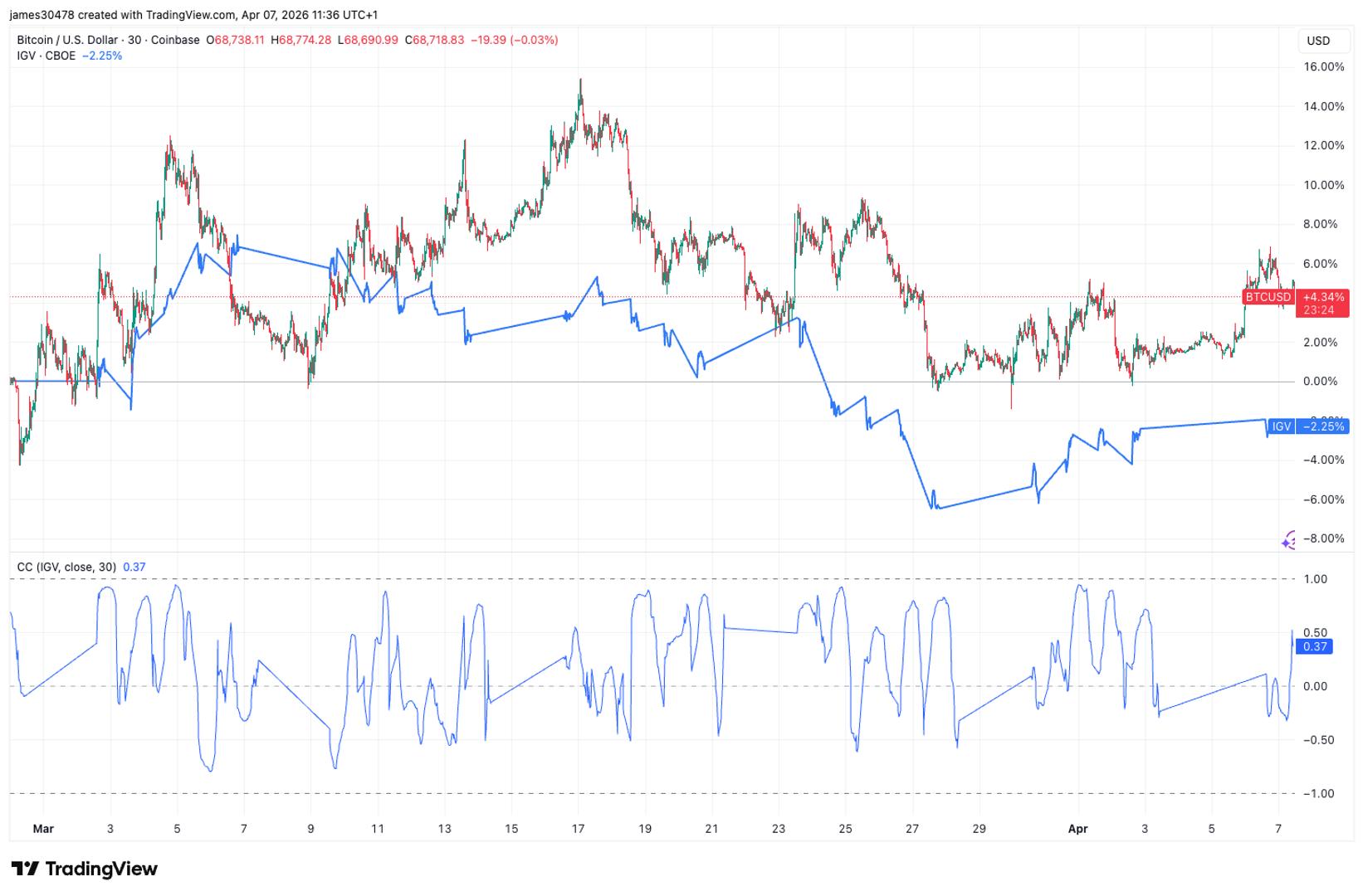
The cryptocurrency market is experiencing a fundamental shift. Bitcoin's correlation with software company stocks—once near-perfect—has collapsed to near zero as geopolitical tensions reshape investor behavior. Understanding this decoupling is critical for traders relying on algorithmic strategies and AI-powered tools.
Why Correlation Breakdown Matters
Correlation collapse signals a structural market change. When two asset classes move in lockstep, traders can rely on predictable patterns. When they suddenly diverge, traditional models fail. This isn't noise—it's a warning signal that your existing trading algorithms may need recalibration.
For years, Bitcoin tracked software stocks closely because both were viewed as "growth" assets favoring low interest rates and innovation narratives. That connection has severed, suggesting:
- Risk-on/risk-off dynamics are fragmenting
- Geopolitical factors now matter more than sector fundamentals
- AI models trained on historical correlations are outdated
Implications for Automated Trading
Machine learning models struggle with regime changes. If your bot was trained on 2020-2023 data where correlation averaged 0.8, it's now operating blind. Algorithms that automatically hedge Bitcoin positions using tech stock shorts are experiencing unintended exposure.
Key considerations:
- Backtesting assumptions break down during geopolitical events
- Mean reversion strategies fail when correlations fundamentally shift
- Risk parameters need immediate review if you're running multi-asset bots
Actionable Insights for Traders
1. Audit your model dependencies. Check whether your strategies rely on assumed correlations. If yes, reduce leverage immediately.
2. Test correlation windows. Run analysis on rolling 30-day and 90-day correlation data rather than assuming historical averages apply.
3. Add geopolitical triggers. Modern trading systems need sentiment data tied to military/political events, not just price action.
4. Rebalance manually during volatility. Don't trust algorithms alone when market structure is shifting.
The Broader Lesson
This decoupling reveals a critical weakness in quantitative trading: over-reliance on stable relationships. Markets evolve. Correlations destabilize. Geopolitical risk becomes primary during crisis periods, overwhelming sector and asset class fundamentals.
The traders who adapt fastest—those who recognize when old rules break and adjust their models accordingly—will outperform those clinging to yesterday's correlations.
The question isn't whether Bitcoin and tech stocks will re-correlate. It's whether your strategy can survive in a world where they don't.